About
A few notes on the path, the work, and what I do off the clock
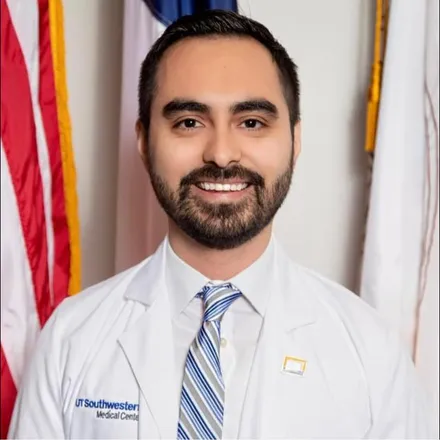 I'm a biomedical scientist working on the early detection of type 2
diabetes. I came to this work from the Rio Grande Valley of South Texas —
a region where the disease I study is a community-level public-health
emergency. I lead my research program independently from San Diego,
alongside teaching, mentoring, and writing.
I'm a biomedical scientist working on the early detection of type 2
diabetes. I came to this work from the Rio Grande Valley of South Texas —
a region where the disease I study is a community-level public-health
emergency. I lead my research program independently from San Diego,
alongside teaching, mentoring, and writing.
The path
My path began in Brownsville, Texas, where I attended Lopez High School (Alumnus of the Year, 2016; Brownsville Independent School District Hall of Fame). I was the first person in my family to graduate from college, and I started at the University of Texas at Brownsville on a full-ride Scorpion Scholar Scholarship, working in the laboratory of Luis V. Colom on amyloid-β neurotoxicity in a rat model of Alzheimer's disease. The summer before my senior year, I traveled to New York to work at Weill Cornell with Randi B. Silver — my first experience in a top-tier research lab, and my first time outside South Texas.
From there I went to Harvard for a PhD in Biological and Biomedical Sciences. My dissertation work at Harvard Medical School / Joslin Diabetes Center, under Rohit N. Kulkarni, examined inflammatory signaling in pancreatic islet plasticity and β-cell identity — and pulled my interest toward the disease I had grown up watching reshape the community around me.
After defending, I took a three-year detour into industry: healthcare strategy consulting analyst at Fletcher Spaght in Boston, advising biotech, medtech, and diagnostics leaders on translation, market positioning, and clinical strategy. That work — including bilingual English/Spanish engagements with Key Opinion Leaders (KOLs) across Latin America — taught me how scientific findings actually become products, clinical tools, and standards of care. The perspective has shaped my research priorities ever since.
Returning to bench science, I joined Ralph DeFronzo at UT Health San Antonio for a postdoctoral fellowship focused on β-cell dysfunction in type 2 diabetes. There, I identified persistent inflammatory lipotoxicity as a driver of impaired insulin secretion despite glucose normalization. That finding raised a question I'm still working on today: if islets remain functionally compromised after glucose looks normal, what are we missing in our diagnostic frameworks?
I later joined Philipp E. Scherer at UT Southwestern's Touchstone Diabetes Center, working on adipose–islet crosstalk in metabolic disease, while concurrently entering UT Southwestern's MD program on a full-ride Presidential Scholarship. After completing the preclinical curriculum and clinical clerkships, I withdrew to pursue a research-first career and relocate to San Diego.
Working with students
I've been an active Harvard College alumni interviewer since 2021, conducting interviews for applicants from South Texas, and an independent premed advisor since 2022. I work with students and families in San Diego and Coronado on college admissions, graduate and medical school applications, and high-school science tutoring.
The students I most enjoy working with are those whose situations don't fit a standard advising playbook — first-generation applicants, students from underserved regions, pre-meds without strong institutional support. My approach to advising mirrors my approach to research: rigor, honesty about what's known and not known, and care for the person on the other side of the table. If you'd like to talk about working together, please get in touch.
Off the clock
I'm a musician — primarily a trumpet player, with secondary instruments in piano and voice. I trained at a fine-arts magnet high school in Brownsville and earned Texas All-State Musician honors (All-State Choir, 2007) along with the lead trumpet position in the All-Region Jazz Band. In college I performed with the UT Brownsville Master Chorale. Music shaped my discipline before science did, and had I not become a scientist, I would have pursued a career as a music educator.